
2026年10月2日、大学院共通授業科目「半導体の深層を理解する2026」は美多剛教授(北海道大学ICReDD)を講師に、「半導体の基礎から学ぶ ― なぜ今、半導体が重要なのか、日本再生への道 ―」と題して、行われました。その様子を紹介します。
Professor Mita, who specializes in organic chemistry, says he himself is learning about semiconductors through books and conversations with researchers. His talk provided an accessible entry point that allowed students from different specialties to begin learning together.
The lesson began with an unexpected question: could you drive through the Seikan Tunnel? From discussions about transportation between Hokkaido and Honshu, to the advantages of transporting light, small semiconductors by aircraft, the conversation shifted to how Rapidus's challenge in Chitose connects to Hokkaido's industries and the future of students. Semiconductors, once news from a distant world, began to feel closer to us, relevant to where we live.
From there, the discussion moved into the world of atoms and electrons. The properties of semiconductors, which can regulate the flow of electricity, and the functions of diodes and transistors were introduced in relation to everyday devices. The convenience of smartphones and AI is supported by a vast number of tiny switches. When you imagine the workings of "0"s and "1"s that are repeated in the palm of your hand, even familiar devices look a little different.
The semiconductor manufacturing process involves a deep understanding of chemistry. The technology of creating microscopic circuits on silicon using light-reactive materials—the story tracing this mechanism conveyed the fascinating connection between everyday learning and cutting-edge manufacturing. Furthermore, the techniques for improving performance by transforming flat surfaces into three-dimensional structures demonstrate the accumulation of human ingenuity.
For students studying in Hokkaido, semiconductors are a topic that connects to their specialization and future career options. Professor Mita's talk conveyed his hope that the students would take an interest in this change, learn about it, and get involved. The professor's very act of stepping outside his field of expertise to learn was also an encouraging lesson for the students.
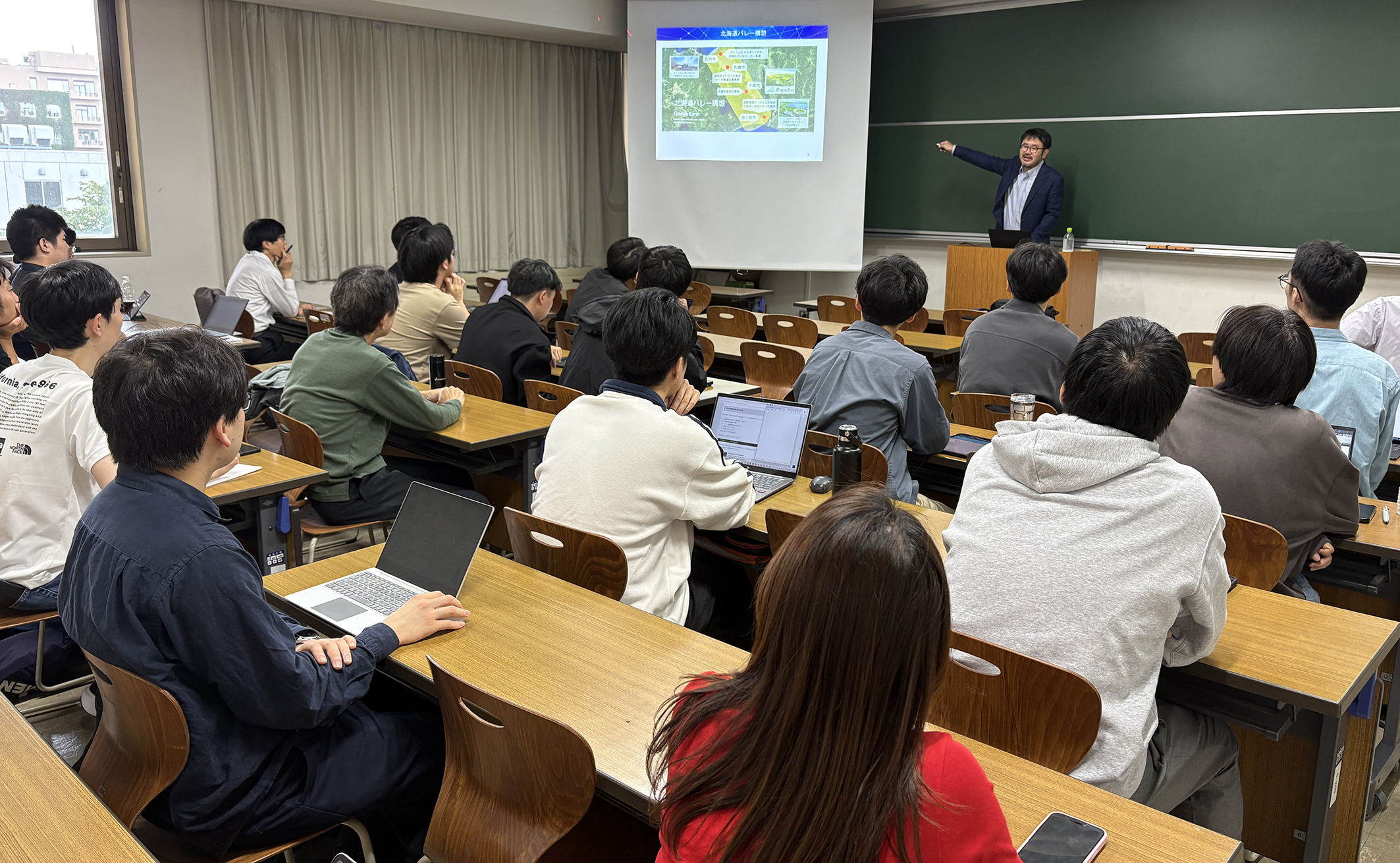
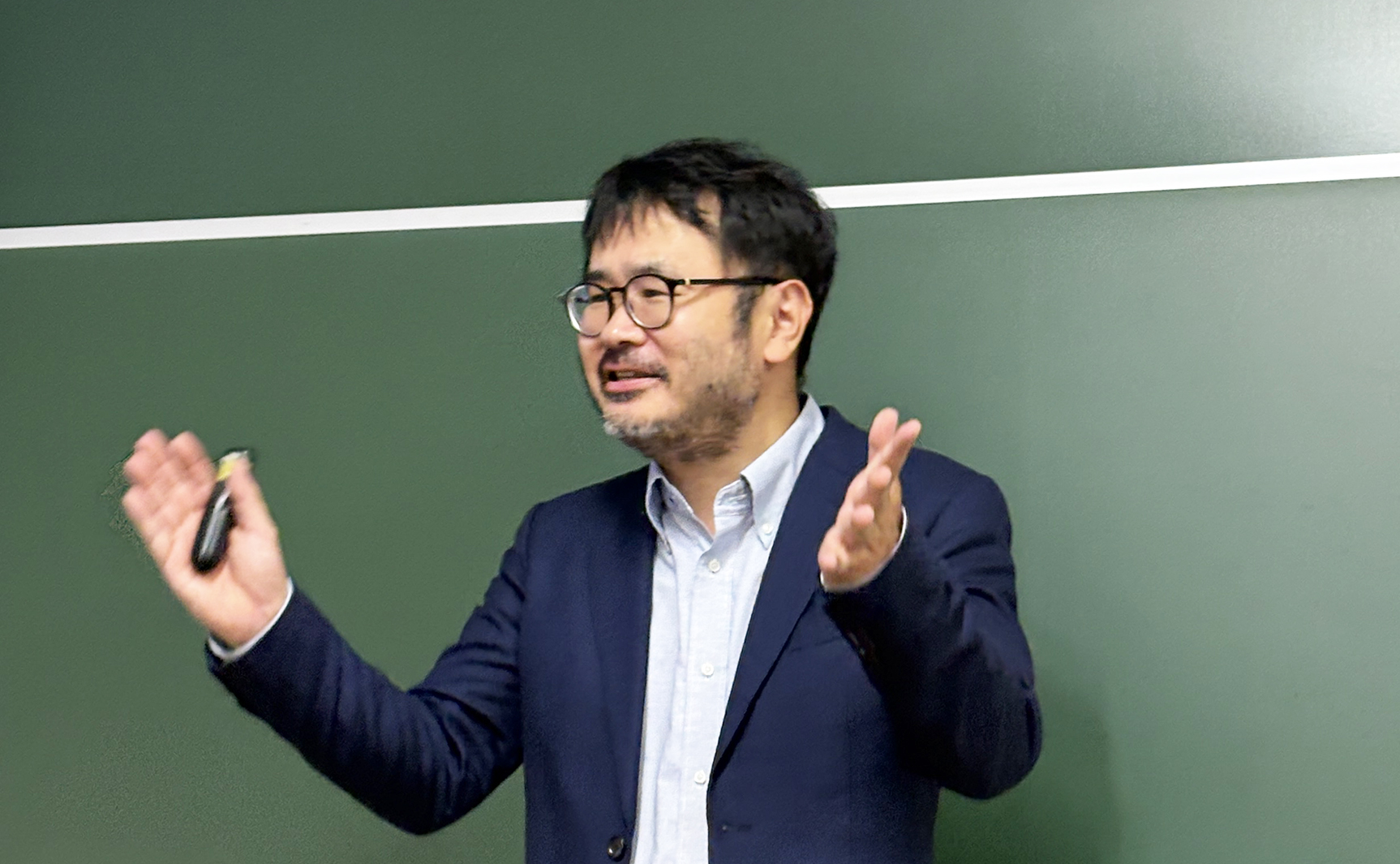
But what impressed me most was Professor Mita's constant smile, his loud voice, and his overflowing enthusiasm. He repeatedly asked the students questions and spoke with such joy about the amazing technology that I was completely drawn in. I felt as if the classroom had become quite hot as I was overwhelmed by his energy.